
Industry 4.0 Explained: The Fourth Industrial Revolution
Understand Industry 4.0, its core technologies, and how this fourth industrial revolution is transforming manufacturing. Learn what it means for your business.
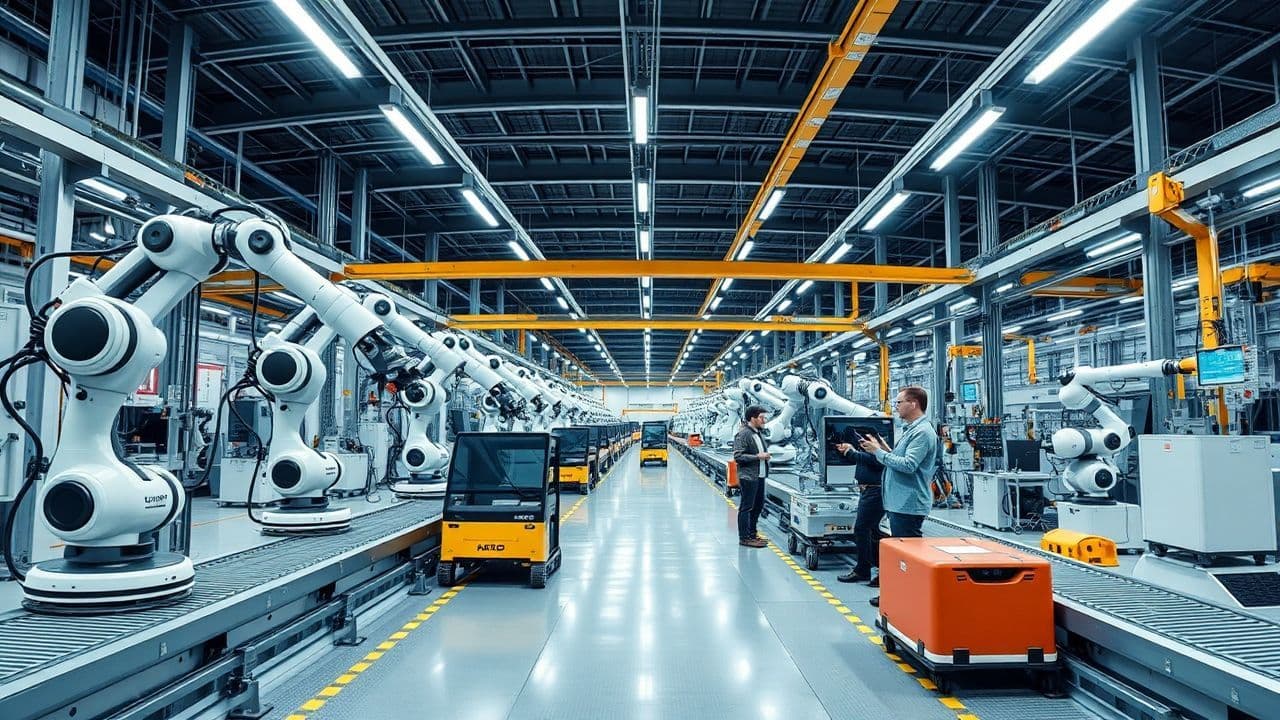
Industry 4.0 Explained: The Fourth Industrial Revolution
Industry 4.0 is transforming how products are designed, manufactured, and delivered. But what exactly is it, and why does it matter for your business? Let's break it down.
What is Industry 4.0?
Industry 4.0 refers to the fourth industrial revolution-the integration of digital technologies into manufacturing to create "smart factories" that are more efficient, flexible, and data-driven than ever before.
The Evolution of Industrial Revolutions
- Industry 1.0 (1760s-1840s): Steam power and mechanization
- Industry 2.0 (Late 1800s-1900s): Electricity and mass production
- Industry 3.0 (1960s-2000s): Computers and automation
- Industry 4.0 (Now): Cyber-physical systems and connectivity
The Nine Pillars of Industry 4.0
1. Internet of Things (IoT) and IIoT
What it is: Connecting machines, sensors, and devices to collect and share data
Impact: Real-time visibility into every aspect of production
Example: Sensors on each machine report performance, temperature, vibration, and other metrics automatically
2. Big Data and Analytics
What it is: Collecting and analyzing massive amounts of data to gain insights
Impact: Data-driven decision making replaces gut feeling
Example: Analyzing production data to identify patterns that predict quality issues before they occur
3. Cloud Computing
What it is: Storing and processing data on remote servers instead of local computers
Impact: Access information from anywhere, scale resources on demand
Example: Engineering teams in different countries collaborate on the same digital models in real-time
4. Artificial Intelligence and Machine Learning
What it is: Computer systems that learn and improve from experience
Impact: Autonomous optimization and predictive capabilities
Example: AI algorithms automatically adjust machine parameters to optimize quality and throughput
5. Augmented Reality (AR)
What it is: Overlaying digital information onto the physical world
Impact: Enhanced training, maintenance, and quality control
Example: Technicians wear AR glasses that display step-by-step repair instructions overlaid on the actual equipment
6. Additive Manufacturing (3D Printing)
What it is: Building parts layer by layer from digital models
Impact: Rapid prototyping, customization, and distributed production
Example: Producing custom replacement parts on-demand instead of maintaining large inventories
7. Autonomous Robots
What it is: Robots that can operate independently and collaborate with humans
Impact: Increased productivity and workplace safety
Example: Collaborative robots (cobots) work alongside human operators, handling repetitive or dangerous tasks
8. Simulation and Digital Twins
What it is: Virtual models that mirror physical assets and processes
Impact: Test changes virtually before implementing in reality
Example: Simulating a new production line layout to optimize flow before spending money on physical changes
9. Cybersecurity
What it is: Protecting connected systems and data from threats
Impact: Secure operations in an increasingly connected environment
Example: Multiple layers of security protect manufacturing systems from cyberattacks
Key Benefits of Industry 4.0
Productivity Gains
- 15-25% increase in productivity
- Reduced downtime through predictive maintenance
- Optimized production scheduling
- Faster changeovers between products
Cost Reductions
- 10-30% lower manufacturing costs
- Reduced energy consumption
- Less waste and scrap
- Optimized inventory levels
Quality Improvements
- 30-50% reduction in defects
- Real-time quality monitoring
- Automated defect detection
- Faster root cause analysis
Flexibility and Customization
- Quick adaptation to market changes
- Mass customization becomes economical
- Smaller batch sizes are viable
- Rapid new product introduction
Industry 4.0 in Action: Real Examples
Siemens: Digital Twin for Production Planning
Siemens uses digital twins to simulate entire factories before building them. This allows them to:
- Test different layouts virtually
- Optimize processes before production starts
- Train operators in a virtual environment
- Reduce commissioning time by 50%
BMW: Collaborative Robots
BMW deployed collaborative robots that work alongside human workers to:
- Assist with heavy lifting and repetitive tasks
- Improve ergonomics and reduce injuries
- Maintain flexibility for product variations
- Increase productivity by 85%
GE: Predix Platform for Predictive Maintenance
GE's Predix platform analyzes data from industrial equipment to:
- Predict failures weeks or months in advance
- Schedule maintenance during planned downtime
- Reduce unplanned downtime by 20%
- Extend equipment life by 10-15%
Getting Started with Industry 4.0
1. Assess Your Current Maturity
Evaluate where you are today:
- Level 1 - Traditional: Manual processes, paper-based records
- Level 2 - Digitized: Basic automation, some digital records
- Level 3 - Connected: Integrated systems, data collection
- Level 4 - Smart: AI-driven optimization, predictive capabilities
2. Define Your Vision and Goals
Be specific about what you want to achieve:
- Reduce downtime by X%
- Improve quality by X%
- Decrease costs by $X
- Enable customization
- Improve sustainability
3. Identify Quick Wins
Start with projects that:
- Solve a real pain point
- Can be implemented quickly
- Demonstrate clear ROI
- Build momentum for larger initiatives
4. Build Your Technology Foundation
Ensure you have:
- Reliable network connectivity
- Data storage and processing capabilities
- Basic cybersecurity measures
- Skills and training programs
5. Scale and Expand
Once you've proven value:
- Apply learnings to other areas
- Integrate systems more deeply
- Add advanced capabilities
- Continuously improve
Common Challenges and Solutions
Challenge: High Initial Costs
Solution: Start small with pilots, use cloud-based solutions with subscription pricing, focus on ROI-positive projects
Challenge: Legacy Equipment
Solution: Retrofit existing machines with sensors, use gateway devices to connect old equipment to new systems
Challenge: Skills Gap
Solution: Upskill existing workforce, partner with technology providers, hire selectively for critical skills
Challenge: Data Management
Solution: Implement proper data governance, use industrial data platforms, start with essential data only
Challenge: Integration Complexity
Solution: Choose open standards and platforms, work with experienced system integrators, implement incrementally
Is Industry 4.0 Right for You?
Consider Industry 4.0 if:
✅ Your competition is gaining an edge through technology ✅ Customers demand more customization and faster delivery ✅ Margins are shrinking and you need to reduce costs ✅ Quality or compliance requirements are increasing ✅ You're struggling to find skilled labor ✅ Sustainability is becoming more important
The Future: Industry 5.0
While Industry 4.0 focuses on automation and data, the emerging Industry 5.0 concept emphasizes:
- Human-machine collaboration
- Sustainability and circular economy
- Resilience and adaptability
- Personalization at scale
But don't worry about 5.0 yet-focus on getting 4.0 right first!
Your Industry 4.0 Journey Starts Now
The transition to Industry 4.0 isn't a destination-it's a journey of continuous improvement. You don't need to implement everything at once. Start with small, focused projects that deliver clear value, and build from there.
The manufacturers who embrace Industry 4.0 today will be the competitive leaders of tomorrow. The question isn't whether to adopt these technologies, but how quickly you can start.
Next Steps
Ready to begin your Industry 4.0 journey?
- Take our Industry 4.0 Readiness Assessment to understand where you are today
- Download our Industry 4.0 Implementation Guide for a step-by-step roadmap
- Calculate the ROI of potential Industry 4.0 initiatives for your facility
- Connect with our experts to discuss your specific needs
Related Reading: